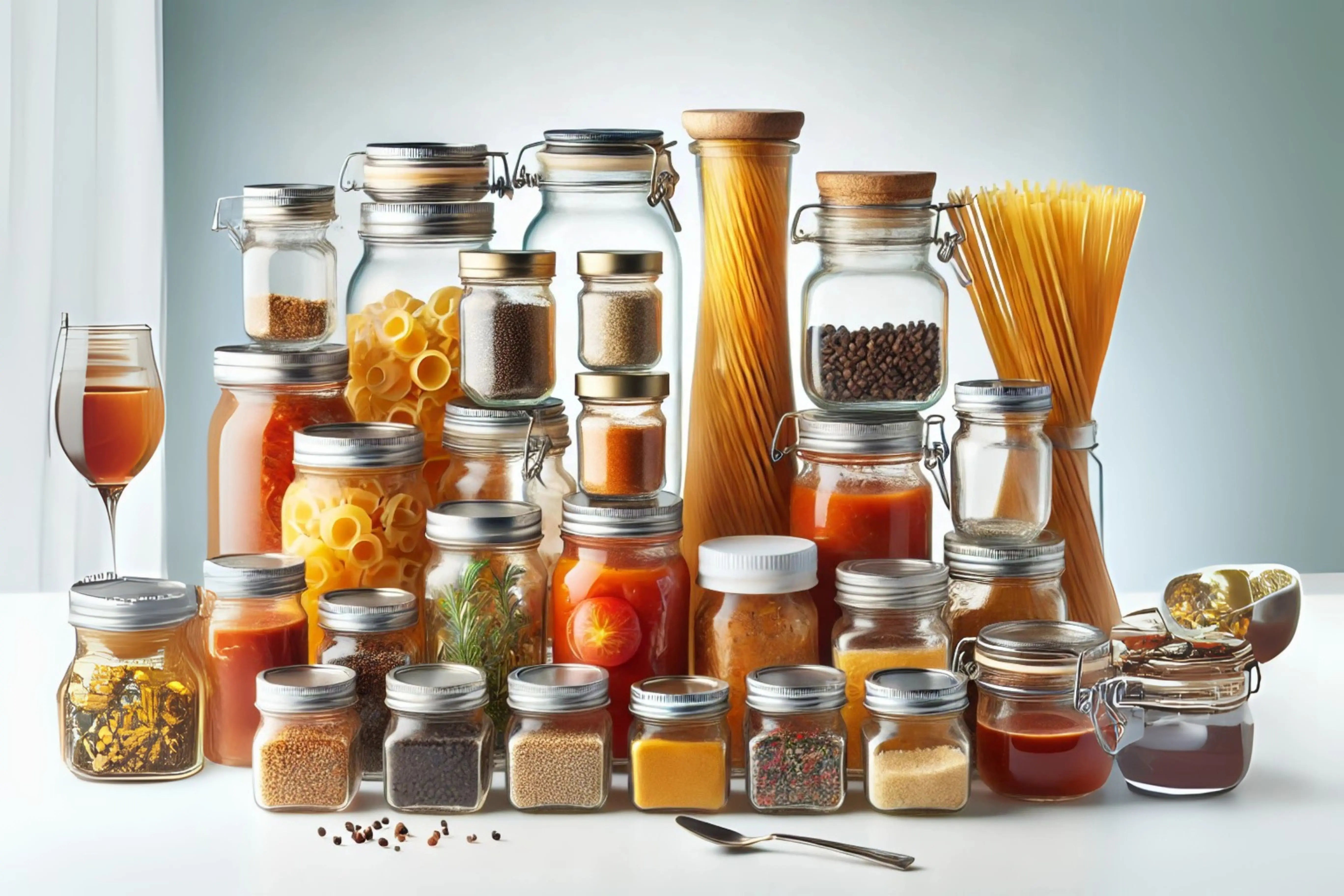

If you're launching a candle line, the jar is doing more work than you might think. It holds the wax, sure, but it's also the thing a customer picks up first, photographs for Instagram, and decides whether to reorder. Pick the wrong glass and you'll find out the hard way — cracked jars after a hot pour, wicks that won't sit right, or a finish that looks cheap next to the candle it's supposed to elevate. This guide is for candle brands sourcing glass jars for candle brands at wholesale volume, not hobbyists making a batch for a craft fair. If that's you, our glass jars collection has options built for exactly this.
Why Candle Jar Glass Isn't Just "Glass"
Not every jar that holds liquid can hold molten wax safely. Candle wax gets poured at 165–185°F depending on the wax type, and the glass has to absorb that heat without stress-cracking — especially at the base, where the flame sits closest once the candle's burning down. Thin, decorative glassware wasn't built for that kind of thermal cycling.
The jars in our glass jars collection are soda-lime glass at a wall thickness that handles repeated heat cycling from pour to final burn. That's the same reason straight-sided jars — no shoulder, no taper — show up so often in candle lines: a consistent wall thickness heats and cools more evenly than a jar with curves and pinch points, which lowers the odds of a crack forming where the glass is thinnest.
Wide-Mouth vs. Straight-Sided: Why Wick Placement Decides the Shape
This is the decision that trips up first-time candle brands the most, and it's not really about looks. It's about the wick.
A wide-mouth, straight-sided jar gives you a flat, even surface for pouring and lets you center a wick without fighting a narrow neck. It also burns more predictably — the melt pool spreads evenly across the full diameter instead of tunneling down the middle, which is the single most common complaint candle brands get from customers ("my candle won't burn to the edges").
There's a hard ceiling here worth knowing before you finalize a jar size: a single wick can only pull a full, even melt pool up to roughly 3.25 inches of internal diameter. Go wider than that with one wick and you'll get tunneling no matter how well you test it — you'd need to move to a dual-wick setup instead. If you're set on a wider jar for shelf presence, plan your wick testing around that number from the start rather than discovering it after a batch of complaints.

Choosing a Size: What Candle Brands Actually Order
Size drives burn time, shelf price, and how much of your margin goes into glass versus wax and fragrance. Here's how the common sizes break down for brands, not hobbyists:
- 4 oz — the sampler and gift-set size. Low glass cost per unit, common for trial kits, wedding favors, and seasonal minis.
- 8 oz — the workhorse. This is the size most retail candle lines standardize on, sitting at the sweet spot between burn time (35–50 hours) and a shelf price customers don't blink at.
- 16 oz and up — the statement or luxury tier. Higher glass cost per unit, but it supports a retail price that can more than absorb the difference, and the extra surface area gives your label more room to work with.
Most brands don't launch with one size — they launch with a "core" size (usually 8 oz) and add a smaller sampler size once the core line proves out. Our glass jars collection runs 0.5 oz up to 8 oz, so if your line plan includes a larger statement jar, flag that with your rep before finalizing your order.
Frosted, Clear, or Colored: Matching Glass to Your Brand
The finish is where a candle jar stops being packaging and starts being branding. Each option sends a different signal on a shelf:
Clear glass shows off the wax itself — the color, any visible botanicals or dried flowers, the clean burn pool as it forms. It's the honest choice for brands whose wax color is part of the story.
Frosted glass diffuses light into a soft, warm glow instead of a hard shine once the candle's lit — a lit wick behind frosted glass reads as noticeably more finished than the same wax in a clear jar. It also hides minor pour inconsistencies, which matters more than most first-time brands expect. If you're building a gifting or luxury tier, frosted is usually the starting point.
Black glass reads as premium on a shelf or in an unboxing video, and it has a practical side too: it hides wick trimmings and wax residue between burns, something clear glass simply can't do. It also doubles as light protection if your fragrance oils are sensitive to UV exposure over a long shelf life.
Amber, blue, and green glass work well for brands building a distinct color identity across a product line, and all three offer some degree of light protection for fragrance stability.

Lids: What to Decide Before You Order
Jars in our core collection ship without lids, on purpose — it lets you match the closure to your brand instead of getting locked into whatever's bundled. For candle brands specifically, that decision comes down to three practical options:
Bamboo lids are the most common pick for candle brands going for a natural, elevated look — they photograph well and read as premium without a premium price tag.
Aluminum lids give a sleeker, more modern edge and tend to show up in minimalist or apothecary-style candle lines.
No lid at all is also a legitimate choice for brands prioritizing scent throw while burning, though you'll want a way to protect the wax from dust between uses if there's no lid.
If you'd rather skip matching lids separately, our glass jars with lids collection has pre-matched pairings in several finishes.
Ordering at Wholesale Volume: What to Expect
Once you've settled on a size and finish, the ordering process itself is where a lot of first-time candle brands get caught off guard. A few things worth knowing going in:
Jars ship by the case, and case counts vary by size and finish — a smaller 0.5 oz jar packs more units per case than an 8 oz jar, simply because of weight and packing density. Your product page will show the exact case count so you can plan quantities against your production run instead of guessing.
If you're not sure a finish will photograph the way you expect, or whether a given size will actually hit your burn-time target once filled, order samples first. It's a far cheaper way to test fit than discovering a mismatch after a full case arrives. Once you've confirmed your line, our wholesale collection covers bottles, jars, closures, and everything else you'd need to round out a packaging order in one place.
The US candle market is on track to reach roughly $3.96 billion in 2026, and that growth isn't slowing — which means more competition on the shelf, and more reason to get the container right the first time instead of reordering mid-launch.
Frequently Asked Questions
What size glass jar should a new candle brand start with?
Most brands start with an 8 oz jar as their core size — it balances burn time (35–50 hours) with a retail price customers are used to. You can add a smaller sampler size or a larger luxury size once the core line is selling.
Can any glass jar hold candle wax safely?
No. Candle wax is poured hot, typically 165–185°F, and thin decorative glass can crack under that thermal stress. Jars made for candles use a wall thickness built to handle repeated heating and cooling from pour through final burn.
Do frosted jars cost more than clear jars?
Frosted and clear jars in the same size are typically priced close together — the finish doesn't carry a major premium, so the choice comes down to brand look rather than budget.
How do I know if I need one wick or two?
It comes down to jar diameter. A single wick handles up to about 3.25 inches of internal diameter evenly. Wider than that, you'll need two wicks to avoid tunneling down the middle instead of burning to the edges.
Do candle jars come with lids included?
Not in our core glass jars collection — lids are sold separately so you can match the closure to your brand. If you'd rather order pre-matched, our jars with lids collection bundles them together.
What's the minimum order quantity for wholesale candle jars?
Minimums vary by jar size and finish since jars ship by the case and case counts differ by weight and packing density. Each product page lists the exact unit count per case so you can plan your order.
Ready to source glass jars for your candle line? Browse the full glass jars collection or order a few samples first to test fit before committing to a full case.